Home
Our ressources
Omnichannel consistency
&
Franchise networks
Corporate and franchise networks: harmonizing signage when every store has its own reality

Corporate and franchise networks: harmonizing signage when every store has its own reality

Published on
00
min read
Omnichannel consistency
Franchise networks
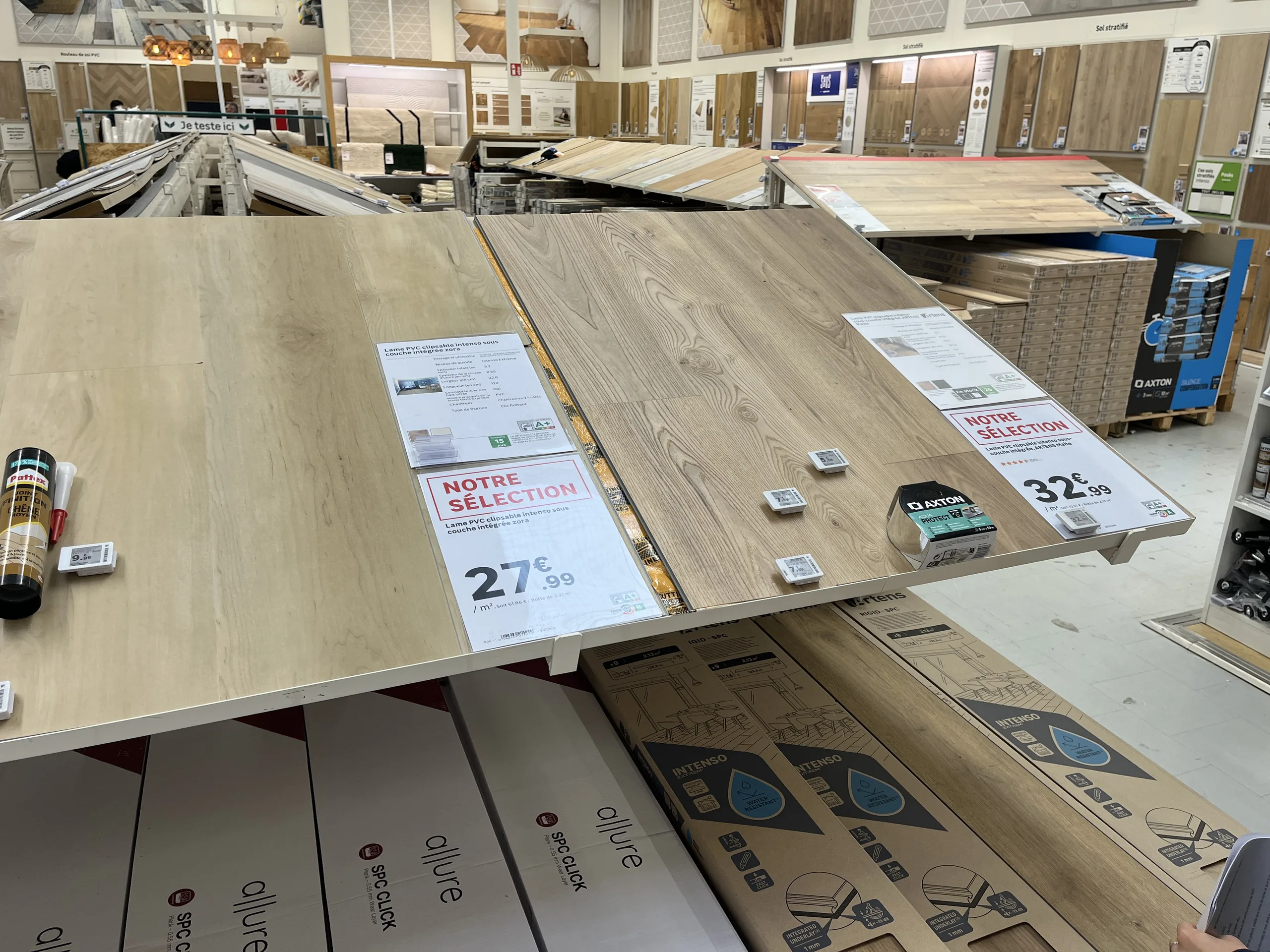
Rayon de revêtements de sol avec des affiches « Notre sélection » posées sur les échantillons de parquet
Table of contents

How can you ensure visual consistency across a retail chain?

Whether corporate or franchised, every store has its own reality. How do you maintain a common brand identity and data set while still allowing stores to manage their own pricing, formats, and local products, and move past the conflict between headquarters and the field?

How can you harmonize signage across a retail network?By separating what must be consistent across all stores (brand guidelines, product data, mandatory disclosures) from what can vary locally (pricing, format, featured products). In a corporate network, headquarters can mandate this framework. In a franchise network, they must make it easier to follow than to bypass: when creating compliant signage takes only a few seconds, no one wants to do it by hand.

A single network, dozens or hundreds of stores, and just as many realities: different floor plans, different layouts, and different customer bases. And, depending on the network model, store managers with varying degrees of autonomy.
For headquarters, the goal is clear: ensuring customers find the same brand, the same identity, and accurate information from one store to the next. For the store, the goal is just as clear: display information quickly, in the right format, with the right price. Between the two, in-store signage is often the site of an age-old conflict. Here is how to overcome it, depending on whether the network is corporate or franchised.

Corporate vs. franchise networks: what changes for signage

In a corporate network, the stores are owned by the brand. In a franchise network, independent business owners operate the brand under contract. This legal distinction has a very concrete impact on signage: who has the final say.

Criterion
Company-owned network
Franchise network
Store ownership
Company-owned networkStores belong to the retailer
Franchise networkIndependent retailers run the brand under contract
Who decides on signage
Company-owned networkHead office sets the rules, with more or less leeway for each store
Franchise networkHead office offers a framework, franchisees keep some autonomy
What stays common
Company-owned networkBrand guidelines, product features, mandatory information
Franchise networkBrand guidelines, product features, mandatory information
What can vary
Company-owned networkPrice, format, featured products, depending on the initiative left to stores
Franchise networkPrice, format, featured products, local products
How to harmonise
Company-owned networkA clear framework, applied automatically by the tool
Franchise networkA tool that is easier to follow than to work around
The level of autonomy varies widely from one network to another, whether company-owned or franchised.

However, the line is not always so clear. A corporate network may grant its stores significant autonomy, and a franchise network can be highly structured. What matters is how the common framework is defined and then applied.

In a corporate network: a clear framework with room for initiative

Being a corporate network doesn't mean imposing everything from headquarters. At Leroy Merlin, for example, the company philosophy allows sales associates to take initiative: setting a price, choosing a product to highlight, or adapting a sign format to their specific department.
But these initiatives take place within a clear framework. Certain information comes from the central office and cannot be modified in-store:

  • Technical specifications of products, and those highlighted as priorities for a given product type.
  • Compliance icons and mandatory disclosures.
  • The brand guidelines, mandatory for the entire network.

This balance is what makes it work: real freedom for local operations, but none when it comes to the brand's image and the accuracy of information.
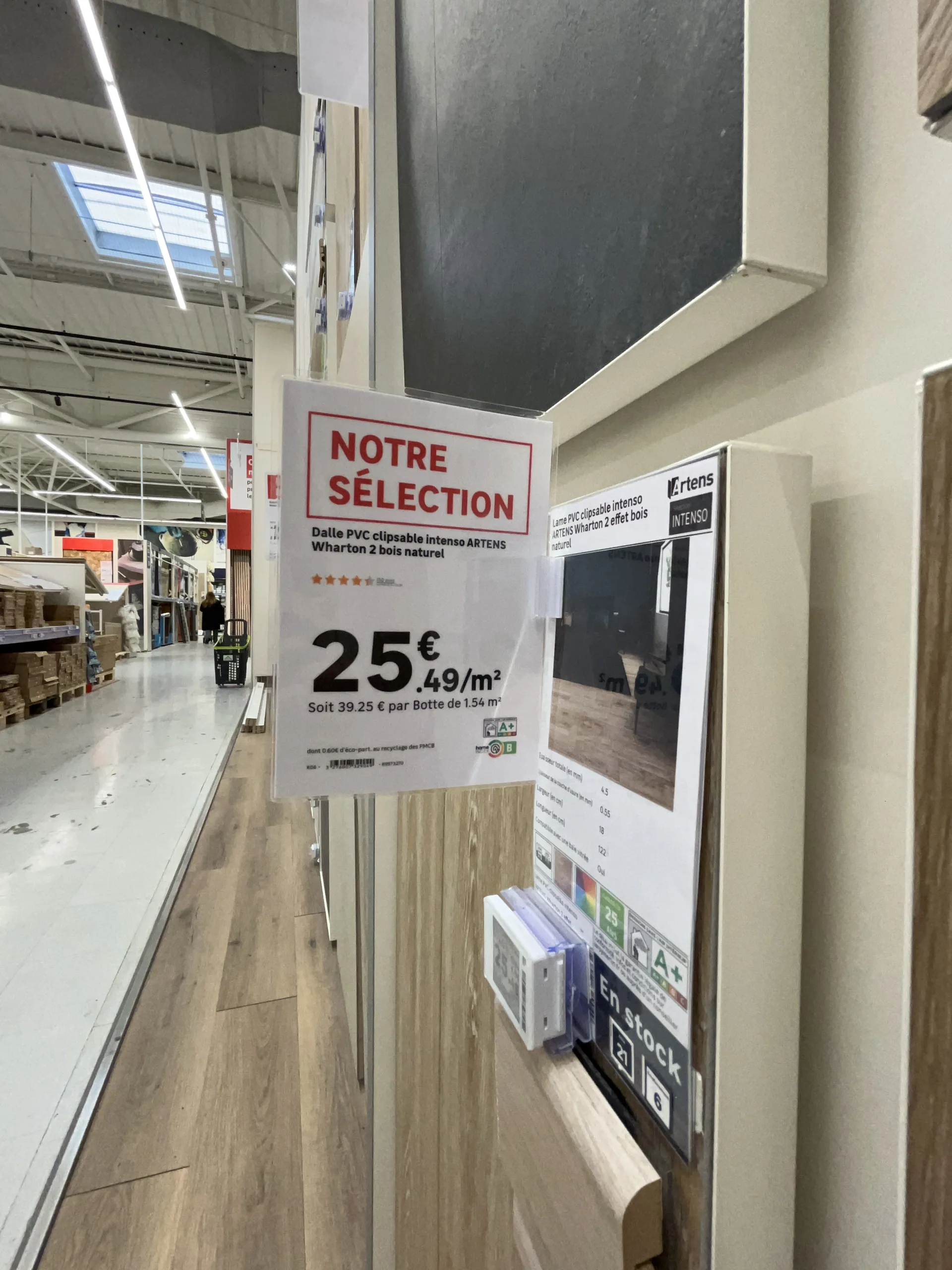
Affiche « Notre sélection » avec prix, caractéristiques produit et pictogrammes, accrochée à côté d’un échantillon de sol
The store chooses what to highlight, while the central office sets the guidelines and the product specifications to be displayed.

In a franchise network: persuade rather than impose

In franchising, the balance is more delicate. The level of autonomy in stores varies significantly from one network to another:

  • In some networks, franchisees are highly committed to the concept: they follow the brand guidelines, source most of their products from a central purchasing office, and decisions made by the franchisee council are then implemented in most stores.
  • In others, stores are completely independent and only follow the central marketing team if they are convinced of the value of the approach.

In these highly autonomous networks, no one can force a store manager to use yellow promotions instead of red. Nor is there anything to stop a store from continuing to display light bulbs in watts rather than lumens, as the head office decided, simply because their staff is used to it. In such cases, the marketing department cannot impose its will: it must offer tools that align with the stores' needs.

The eternal conflict between headquarters and the point of sale

Without the right tools, in-store signage creates frustration on both sides.
On the head office side
, marketing or merchandising teams design a global brand identity and ensure they have reliable data references. But in the field, the guidelines aren't followed and the displayed information is non-compliant. Each store does things its own way, often using office software templates.
On the store side
, the experience is just as painful. When signs are created by the central office or an agency, it can take a week to receive them. And when they arrive, the format doesn't fit the store layout, or the price is already outdated.
This isn't just a matter of convenience. A missing, incorrect, or late sign means a gap in sales, which directly impacts the store's revenue and margins.
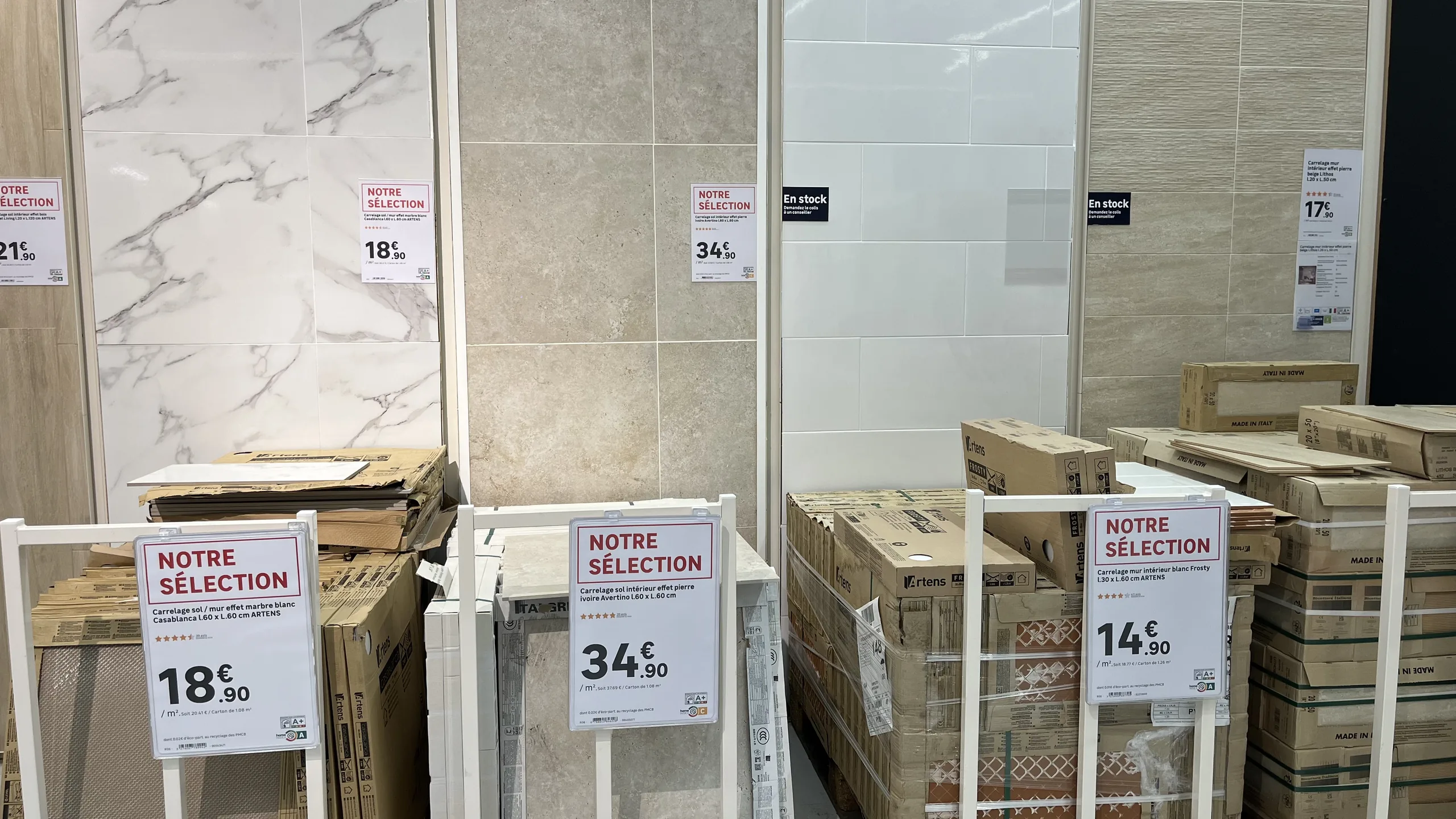
Rayon de carrelage avec plusieurs affiches prix « Notre sélection » identiques sur pied devant les produits
Consistent, up-to-date signage: what headquarters expects, what the store needs.

Gently enforcing the framework: simplicity as the best argument

The solution isn't to lock things down further. It's to make following the guidelines easier than bypassing them.
A tool like PiiVO POSter automates the creation of signage using brand data, in line with corporate branding. Stores can only customize what is truly useful on the ground, such as price or format. Everything else—product data and graphic standards—comes from headquarters.
The math is simple for the sales associate: a compliant sign is created in seconds and updates automatically if the price or price type changes, with no need for manual verification. Starting from an office template and redoing everything by hand becomes far too time-consuming. Even in a network where they have the freedom to do so, stores naturally stay within the guidelines.
Everyone wins: headquarters regains a consistent brand image, and the store saves time while displaying accurate information. This division of labor isn't set in stone; each brand defines it based on its own structure and the level of autonomy it grants its stores.
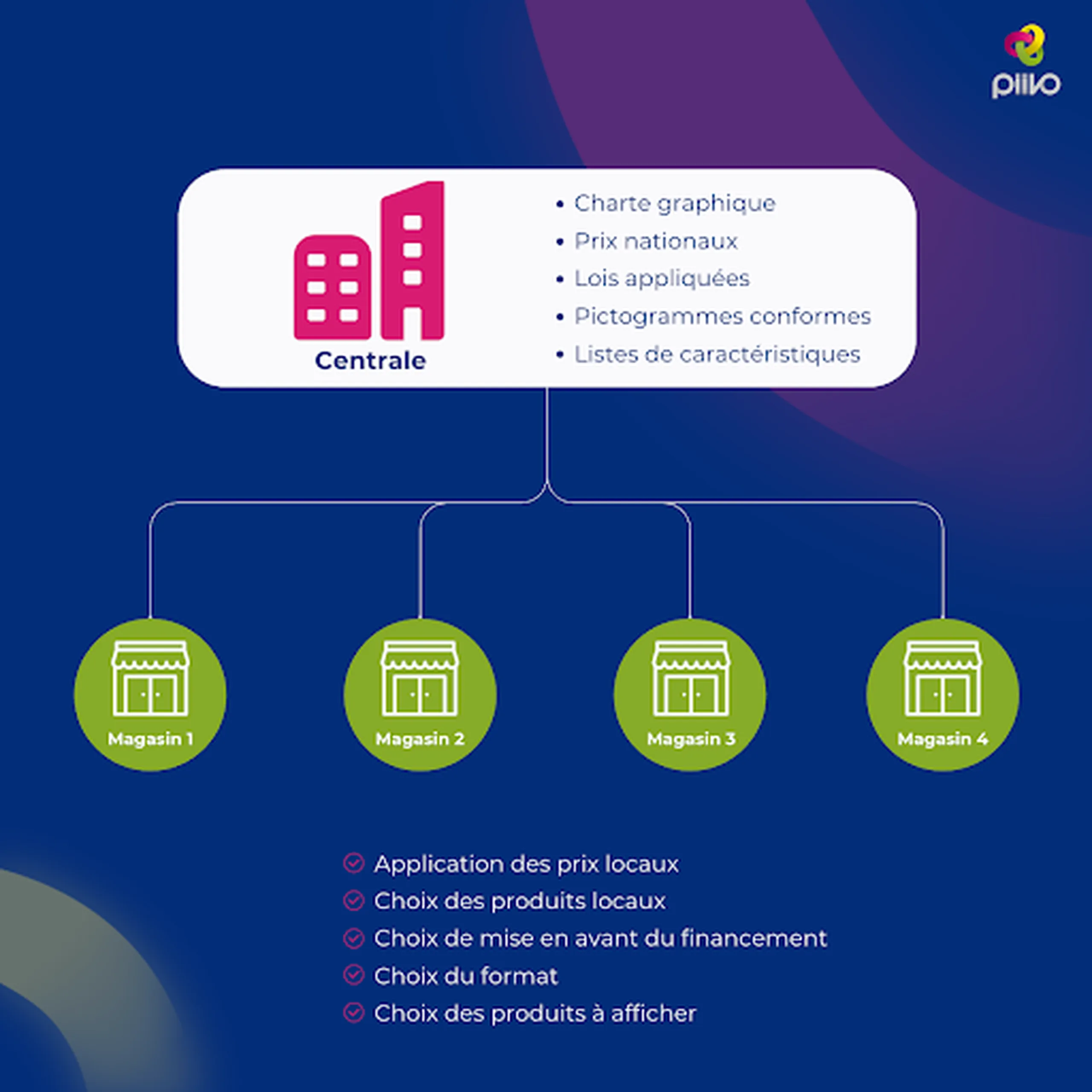
An example of the division between headquarters and stores for one of our clients. This setup is fully customizable to meet the needs of any brand.

Local products: maintaining consistency outside the national catalog

Franchisees often sell products that don't go through headquarters: local items selected by the store. These products fall outside national data, and that is where signage most easily goes off-track.
To bring them into the same framework, the platform connects directly to the store's point-of-sale system. It pulls local prices, identifies whether a product is national or local, and retrieves the correct data for each case.
The tool then acts as a guide. Take a sports store selling a locally sourced bike. By choosing the "technical bike" sign template, the associate is guided toward relevant features, such as the type of brakes (hydraulic disc or otherwise) or the derailleur (electronic or mechanical), using clean, compliant icons. Even for a product outside the catalog, the sign respects the branding and data framework set by headquarters.

How to harmonize signage across a network: the checklist

  1. Define what is common to the entire network: graphic standards, product features, and mandatory disclosures.
  2. Define what can vary in-store: prices, formats, and featured products.
  3. Populate signs with data from the brand, with no manual entry.
  4. Make the right sign faster to create than any workaround.
  5. Update automatically posters when a price changes.
  6. Also cover local products, by connecting to the stores' point-of-sale system.

To learn more about organizing signage across a network, see our complete guide to in-store signage, and our article on how to create successful POS and POP materials.

In summary

Whether integrated or franchised, a network needs a common framework for signage: a style guide, accurate data, and compliant disclosures. What changes is how you enforce it. The headquarters of an integrated network can mandate it; that of a franchise network must make it self-evident.
In both cases, the best lever remains the same: a tool that produces a compliant, up-to-date poster in seconds, while still allowing the store to manage the aspects that reflect its local reality.

‍

‍

‍

Learn more

Managing your network's signage: //the 2026 best practices guide.//

Do you manage an integrated or franchise network? Discover our methodology for turning your signage into a driver of operational excellence. 25 pages of expertise, benchmarks, and practical checklists.

Download the white paper
Oops! Something went wrong while submitting the form.
Free resource
High-quality PDF format
Certified retail expertise
Frequently asked questions

Frequently asked questions about signage in integrated and franchise networks

What is the difference between an integrated network and a franchise network?

In an integrated network, stores are owned by the brand, which can impose its own rules. In a franchise network, stores are operated by independent business owners under contract: the headquarters sets a framework, but they have greater autonomy.

How can you ensure franchisees follow brand guidelines?

By giving them a tool that automatically applies brand guidelines and makes creating compliant posters faster than any manual template. When the right poster can be created in seconds, franchisees have no reason to stray from the guidelines.

What can a store customize on its signage?

Local store-level decisions include pricing, local products, the format best suited to the location, and featured items. Product specifications, mandatory disclosures, and brand guidelines remain defined by corporate headquarters. This distribution of responsibilities is configured for each individual banner.

How do you display a franchisee's local products?

By connecting the display platform to the store's point-of-sale system. It retrieves pricing and information for local products and provides sign templates that guide the salesperson while maintaining the brand's visual identity.

Why does signage create tension between headquarters and stores?

Because headquarters requires brand consistency and data compliance, while stores need signage that is fast, correctly formatted, and cost-effective. When signs arrive late or have to be redone by hand, everyone gets frustrated, and sales ultimately suffer.

Additional resources

To learn more

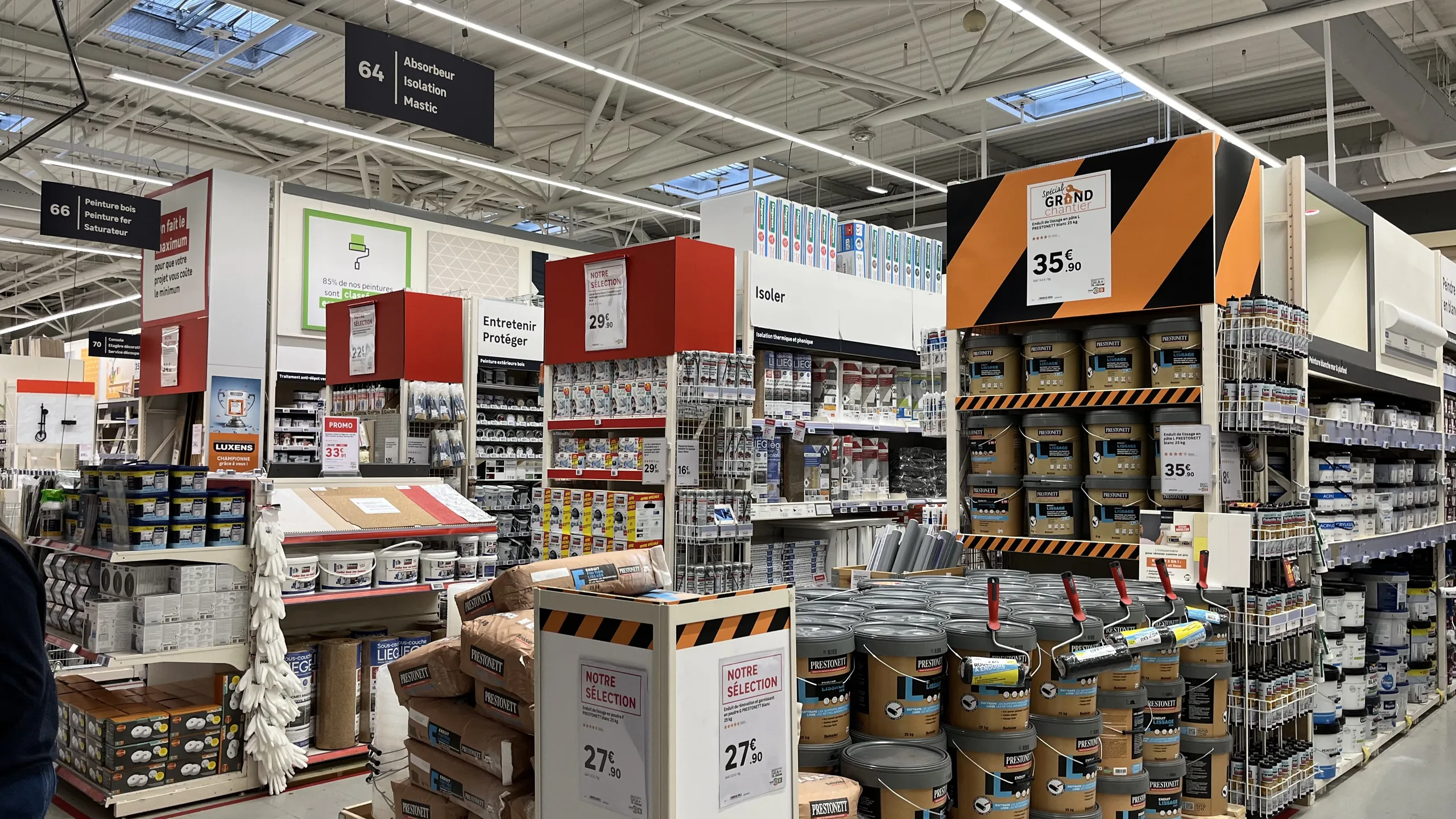
Allée principale d'un magasin de bricolage bordée de têtes de gondole avec frontons de couleur et affiches prix
Omnichannel consistency
Franchise networks

Endcaps: how to turn them into a real sales driver

As one of the most visible spots in the store, an end-cap only sells if its signage is clear and accurate. Definition, materials, message hierarchy, compliant strike-through pricing, and ensuring consistency across an entire network.

00

min read

What is an end-cap display?An end-cap is the end of a shelving unit (the gondola) placed facing the store's main aisle. It is one of the most visible locations in the retail space: it is used to highlight promotions, new arrivals, or seasonal products. An effective end-cap makes it clear at a glance what is being featured and why, using a hierarchical display and the right price.

In a large retail store, few locations are as coveted as the end-cap. Customers pass by them as they move through the main aisle, and the products displayed there enjoy a level of visibility that the rest of the aisle cannot offer.
However, not all end-caps drive sales. Some catch the eye and trigger a purchase; others simply pile up products under contradictory signs. The difference rarely lies in the furniture itself. It mainly comes down to the signage: what it says, how it prioritizes information, and whether the price it advertises is correct.

What is an end-cap display?

A gondola is the shelving unit that forms the aisles of a store. Its end is the extremity that faces the main aisle, perpendicular to the shelving run. It is thus distinct from the aisle end, located at the end of the aisle, and the standard shelving, where products are arranged along the shelves.
The expression "end-cap" has even entered common parlance to refer to anything highlighted or in the foreground. In-store, the location is primarily used to:

  • Highlight a sales campaign : promotions, low prices, catalogs, or sales.
  • Launch a new product or an exclusive item.
  • Support a seasonal event : back-to-school, gardening, holidays, or heating.
  • Create a display that brings several products together around a single use.

What distinguishes an effective endcap from an unsuccessful one

An effective endcap makes it clear at a glance what is being highlighted and why. The signage must catch the eye from the aisle, then allow the customer to identify the products and their prices without hesitation.
A highly visible promotional price, potentially accompanied by a strikethrough price when the promotion justifies it, can be very effective. But if every product, every price, and every message tries to grab attention equally, the whole display becomes difficult to read. The customer no longer knows where to look and simply walks on by.
An endcap also loses its effectiveness when:

  • The materials contradict each other : a sign announces a discount, but the product label shows a different price.
  • A price is outdated : the promotion has changed, but the sign remains.
  • Materials are cluttered without a clear theme : signs for different promotions, mismatched formats, or inconsistent branding.

The golden rule: prioritize your signage

A readable endcap works like a magazine page: a headline, then the details. A large sign presents the promotion or a theme that brings several products together; smaller signs provide information specific to each item (name, features, price).

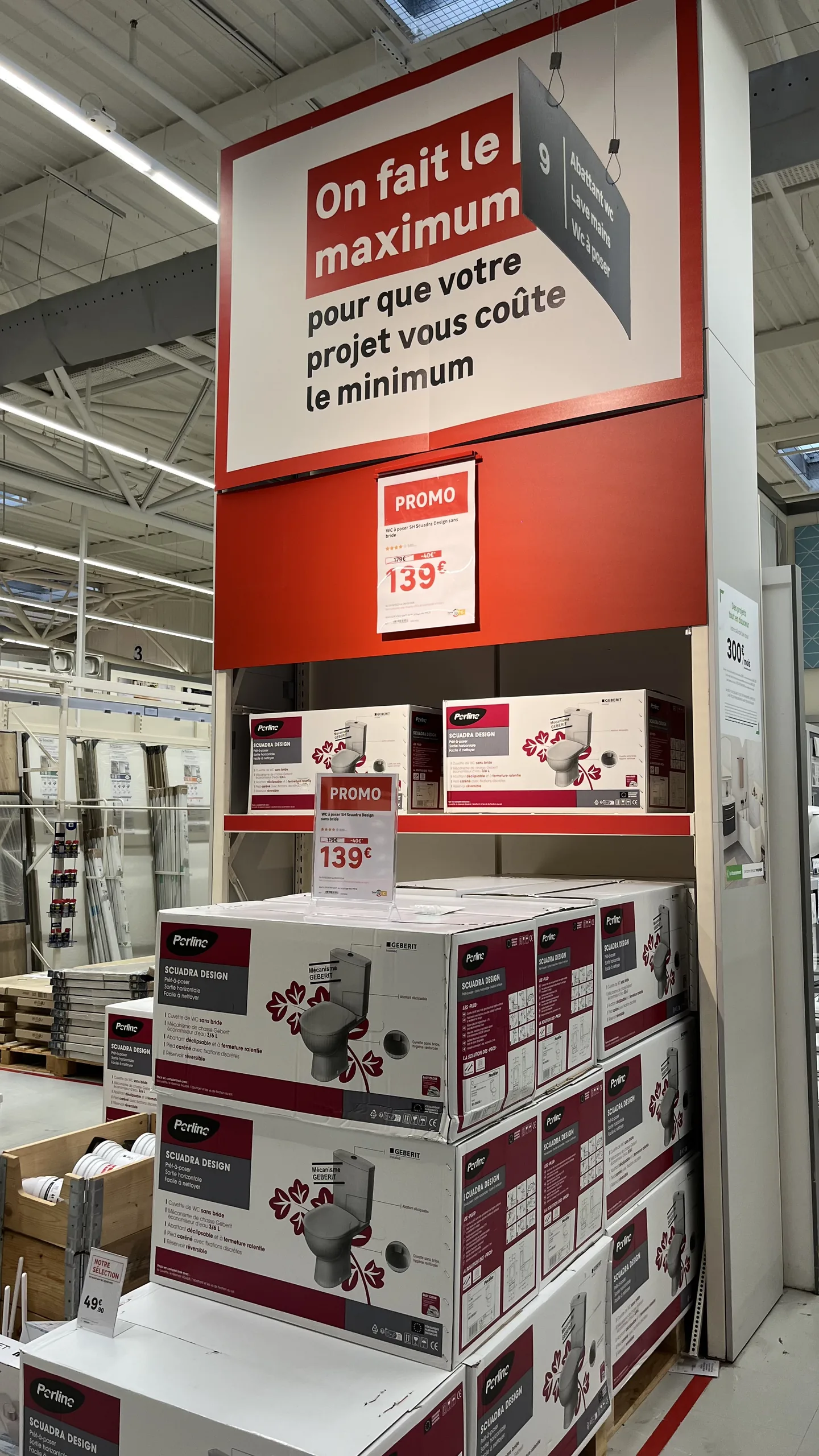
Tête de gondole avec un grand fronton de message, une affiche promotionnelle au prix visible et des étiquettes prix sur les produits
The header carries the message, the poster promotes the price, and the label provides the details: three levels of information.

This hierarchy is not just a matter of graphic design. Marketing, merchandising, purchasing, and store teams must share the same logic: what is the main message, which products are being highlighted, and which medium carries which information. Without this common logic, everyone adds their own sign, and the endcap becomes a patchwork.

Endcap display materials

Terminology varies significantly from one retailer to another: the same material may be called a header, a banner, or a sign depending on the network. Here are the main materials found on and around an endcap.

Signage
Purpose
Typical content
Gondola end header or banner
PurposeAnnounce the campaign or theme, visible from the aisle
Typical contentCampaign name, message, mood image
Promotional poster
PurposeHighlight the main offer
Typical contentPromotional price, compliant was-price, offer mechanics
Product price sign
PurposeGive the price and key facts for each item
Typical contentProduct name, price, key features
Shelf price label
PurposeGuarantee the exact price next to the product
Typical contentPrice, unit price, mandatory information
Shelf wobbler (stop-rayon)
PurposeCatch the eye on a specific product
Typical contentShort hook, price or benefit
Side panel
PurposeExtend the message to the sides of the unit
Typical contentCampaign theme, images, advice
Roll-up, banner or large print
PurposeSignal the campaign from a distance, in large format
Typical contentShort message, headline price, image
Names vary from one retailer to another: header, banner or topper can refer to the same item.

Other materials often complement the display: small poster, product label, shelf edge strip or shelf talker, endcap back panel, endcap base wrap, aisle flag, advice card, product sales sheet, promotional sticker, floor decal or pallet skirt for products displayed on pallets.

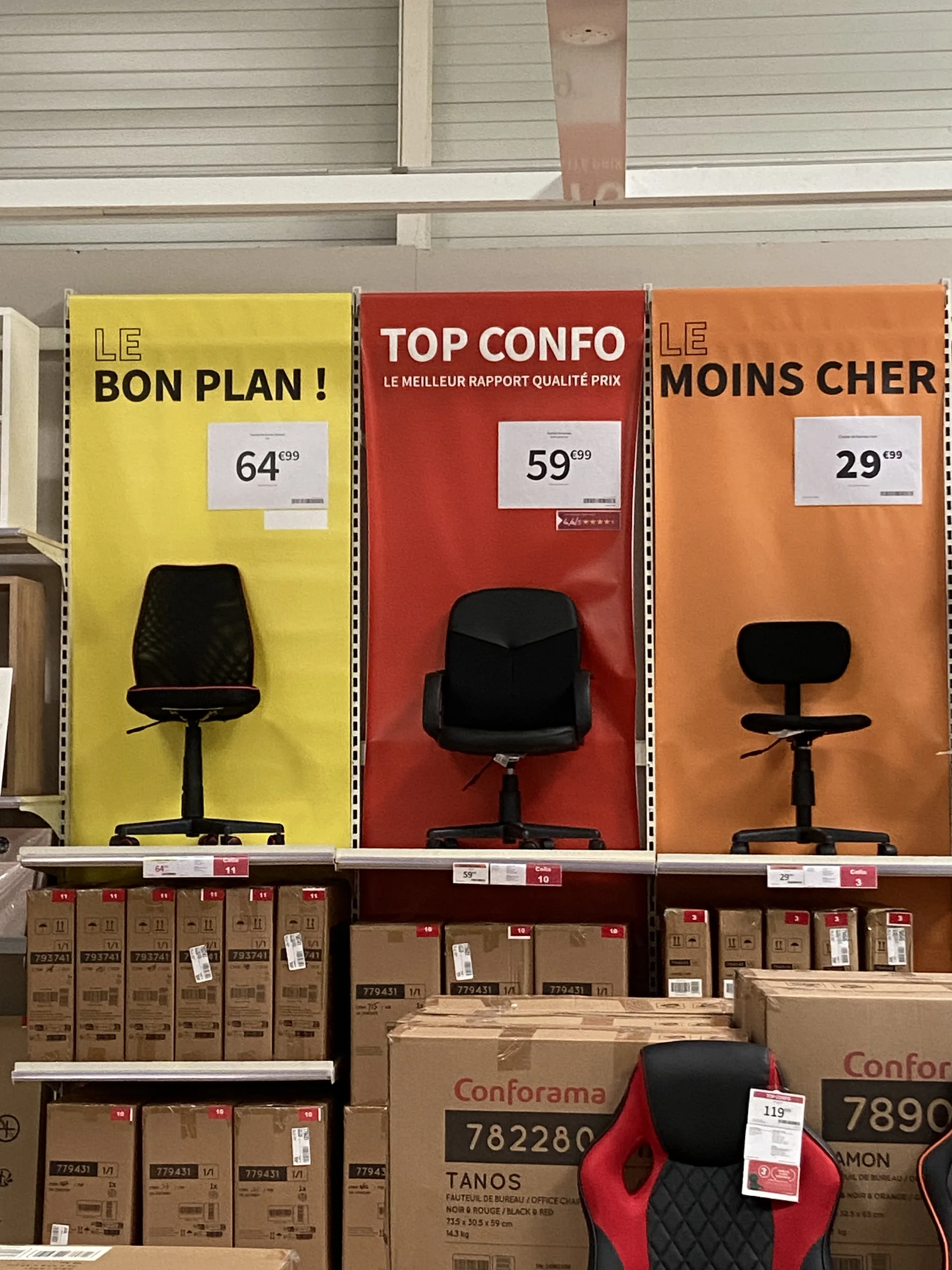
Trois kakémonos de couleurs différentes au-dessus de fauteuils de bureau, chacun avec un message et une affiche prix
Three messages, three colors, one price per product: a display that is easy to read from the aisle.

Price: the information you can't afford to miss

In such a high-visibility location, graphic consistency matters, but the accuracy of the displayed price matters just as much. An incorrect price on an endcap is seen by every customer walking down the aisle, creating an immediate discrepancy at checkout.
Strikethrough pricing requires special attention. Under the European "Omnibus" Directive, any price reduction announcement must indicate the prior price, meaning the lowest price charged during the 30 days preceding the reduction (Article L112-1-1 of the French Consumer Code). A promotional endcap sign must therefore be based on a reliable price history, not on manually re-entered figures. To learn more, see our article on the most common in-store pricing errors.

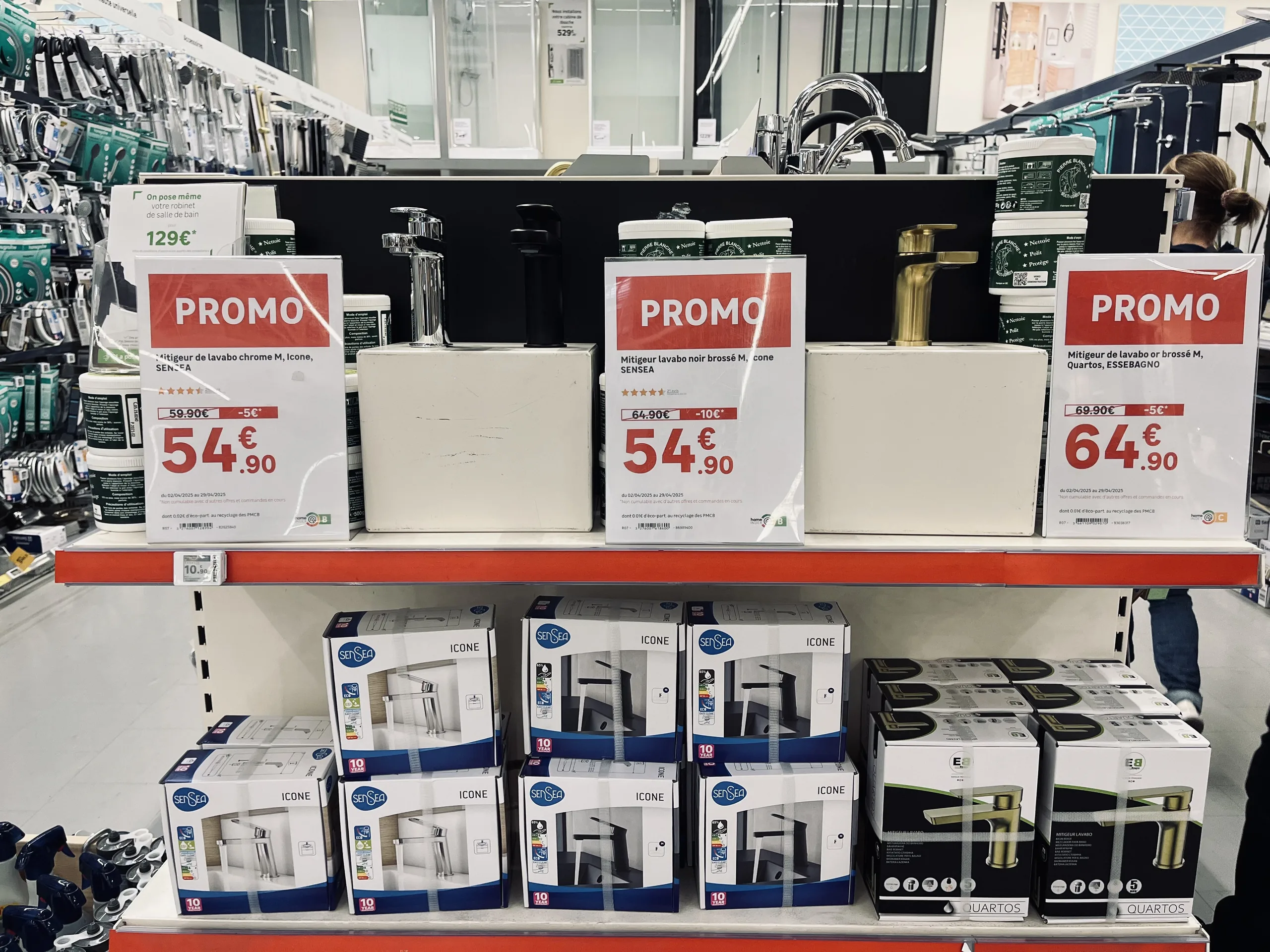
Affiches promotionnelles avec prix barré et prix remisé au-dessus de mitigeurs exposés en tête de gondole
Strikethrough price, discounted price, product description: on a promotional sign, every piece of information must come from the data.

Maintaining a consistent campaign across an entire network

In a retail chain, the challenge scales up: the same campaign must be rolled out across dozens or hundreds of locations, where endcaps vary in both size and layout.
The successful method relies on a clear division of roles:

  1. Headquarters defines the framework : the products or campaigns involved, the messaging, the graphic guidelines, and the display templates.
  2. The store adapts to its layout : the staff selects the specific items being featured and chooses the appropriate formats for each product based on the available endcap space.
  3. Data powers the materials : prices, product information, and campaign terms are pulled directly from the retailer's systems, with no manual re-entry.
  4. Price changes are flagged : when a price changes, the team is alerted and can immediately produce an updated display.

This is how a platform like PiiVO POSter : promotional products and their corresponding templates are made available to stores, which then assemble their end-cap displays within a shared framework. The displays maintain a consistent brand identity everywhere, while still accounting for differences between individual stores. Naturally, the installation and monitoring of shelf materials remain part of the store's operational workflow.

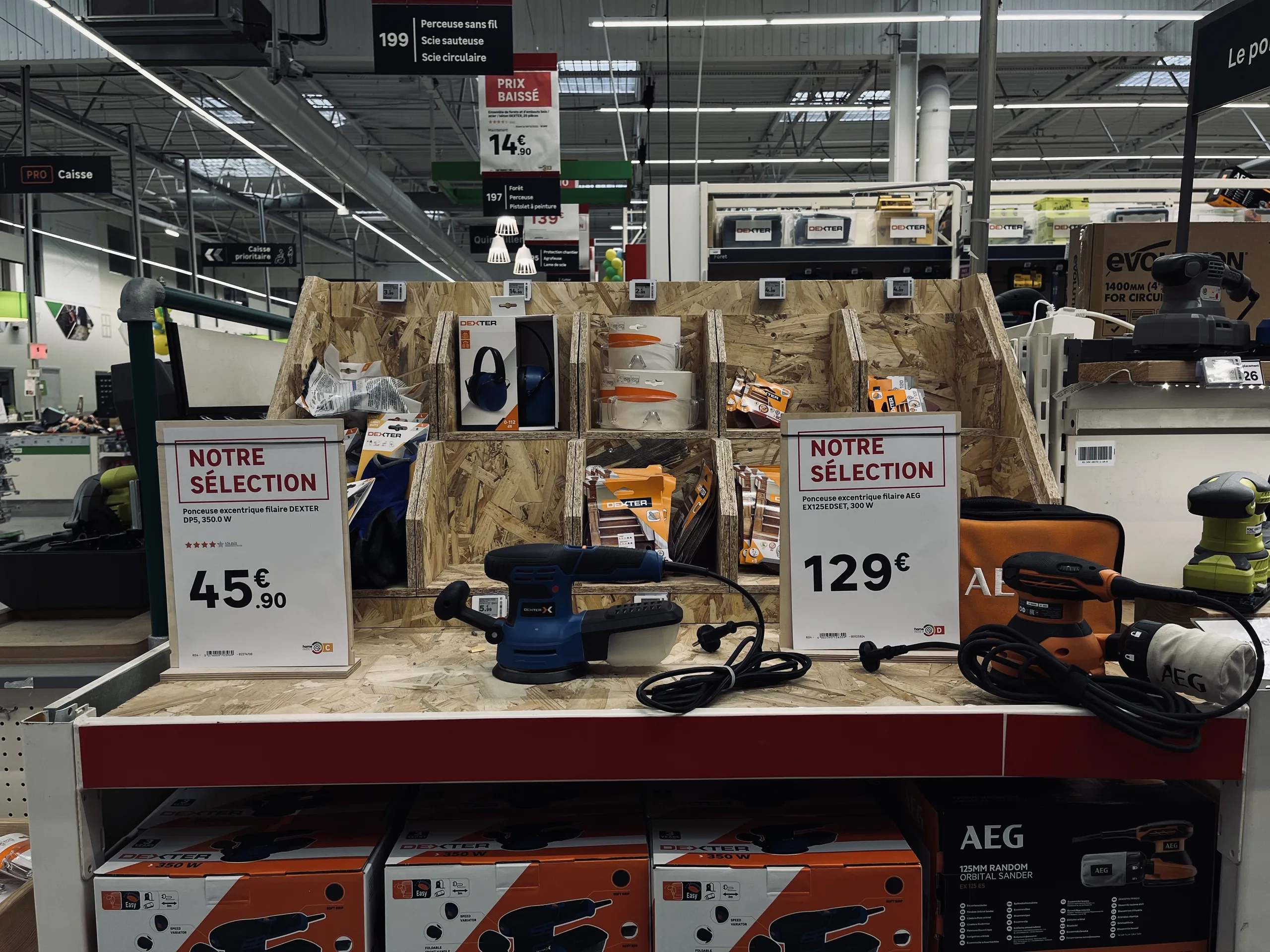
Tête de gondole d'outillage avec deux affiches « Notre sélection » indiquant le prix de ponceuses exposées
The store chooses the products it wants to highlight, and the display automatically incorporates the brand's template and data.

Large formats: print in-store or at the printer

End-cap display materials range from small labels to large banners. They are not all produced in the same way:

  • In-store, using a printer for small and medium formats, or on plotter for large posters.
  • At a print shop, for very large formats or specific media (banners, signage). The file must then comply with their specifications: dimensions, bleeds, crop marks, black overprint, vector graphics, and color profile.

A signage creation platform can automatically prepare these files with the required prepress settings, using the same data and templates as for smaller formats. There is no mandatory "end-cap" format: any media whose content can be populated by the brand's data and styled according to its graphic guidelines can be automated. To understand the principle, see our article on how toautomate price label creation.

How to create an effective end-cap: the checklist

  1. A single main message, readable from the aisle.
  2. A clear hierarchy : large signage for the promotion, smaller signage for each product.
  3. A visible and accurate price, with a compliant strikethrough price when the promotion warrants it.
  4. Consistent signage : same promotion, same brand guidelines, no expired posters.
  5. Products selected based on the actual layout of the store, and formats adapted to the available space.
  6. Quick updates as soon as a price or promotion changes.

In summary

The end-cap is one of the most visible locations in the store, and therefore one where signage has the most impact. To turn it into a real sales driver, you need a clear main message, a hierarchy between the different signs, and a price that is accurate, compliant, and consistent with the point of sale.
In a retail network, this requirement is managed at the level of each promotion: a common framework defined by headquarters, adaptation by each store, and signage populated by data rather than re-entered by hand.

‍

‍